Mold Prevention After Water Damage: Indiana Homeowner Guide
The water is out, the floor looks dry, and life moves on. Then three weeks later a musty smell shows up in the basement, and the real bill arrives. Mold after water damage is not bad luck. It is a race Indiana homeowners can win with the right first 48 hours. Here is how to run it.
Key Takeaways
- Dry or remove wet materials within 24 to 48 hours and mold usually never starts.
- Indiana humidity works against you, so mechanical drying beats open windows.
- Document the water damage before cleanup, because mold exclusions make late claims hard.
The 24-48 Hour Rule
Mold spores are already in every home, waiting for moisture. The EPA's mold and moisture guidance is blunt about the timeline. Materials dried within 24 to 48 hours of a leak usually will not grow mold. After that window, spores germinate, a musty odor develops, and visible patches follow on drywall, carpet, and wood.
Growth speeds up in exactly the conditions a wet Indiana basement provides. Temperatures between 77 and 86 degrees, humidity above 60 percent, and still air all accelerate it. The takeaway is simple. You do not have a week to decide. You have two days to act.
Why Indiana Homes Are a Mold Magnet
Northwest Indiana summers run humid, and lake-effect weather keeps moisture in the air for much of the year. Basements and crawl spaces across the region sit below grade and ventilate poorly. State health guidance recommends keeping indoor humidity between 30 and 60 percent, and many Indiana basements idle above that line all summer.
That baseline matters after a loss. A house that is already damp gives you a thinner margin when a pipe bursts or a storm pushes water in. Mechanical drying is not optional here. It is the local price of a dry home.
Step-by-Step: Stopping Mold After Water Damage
- Stop the source and document first. Fix the leak, then photograph everything before you remove a single item.
- Extract standing water fast. A wet/dry shop vacuum handles small spills, and a submersible pump handles deeper water.
- Remove what cannot be saved. Soaked carpet pad, saturated drywall, and wet insulation hold moisture you cannot dry out.
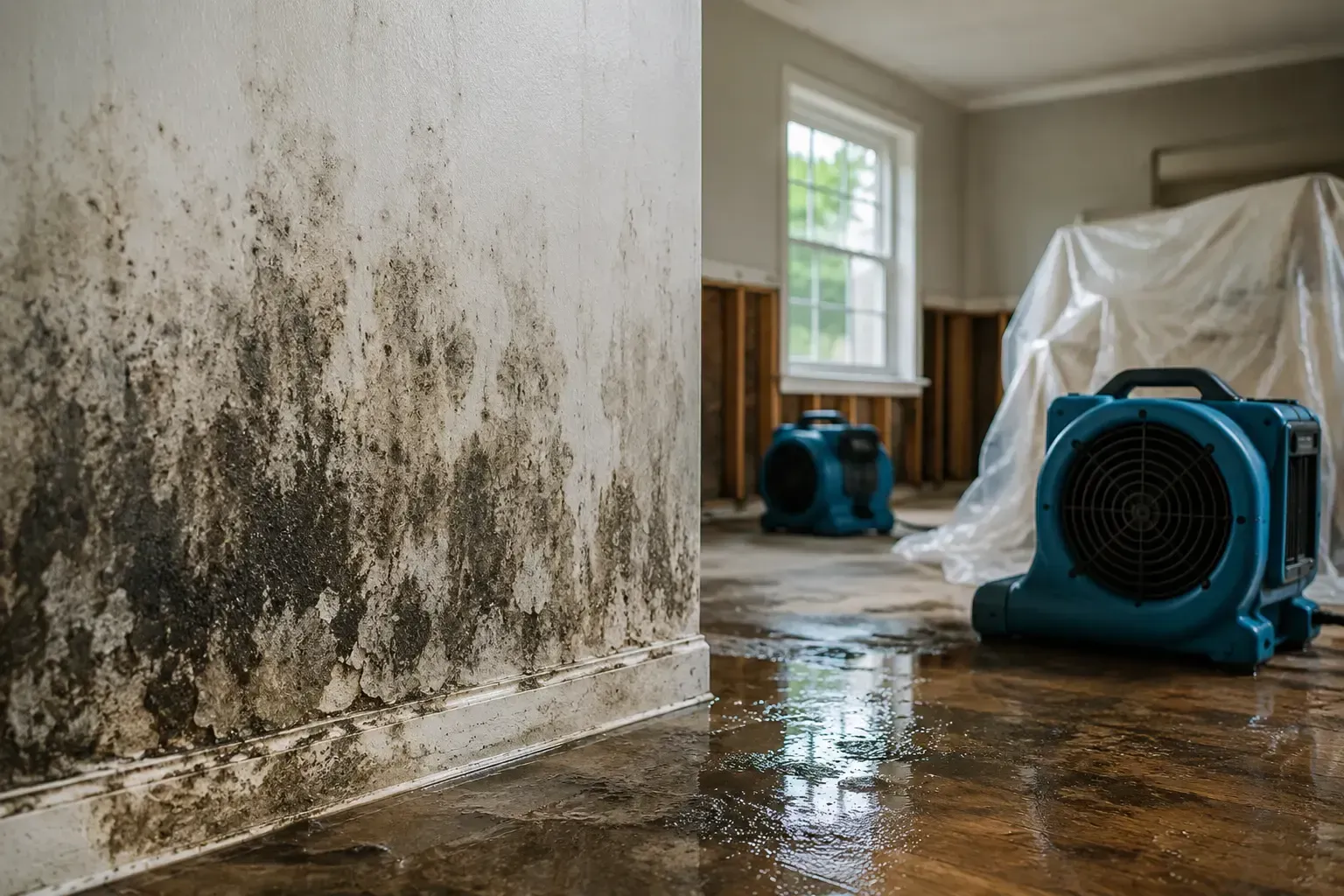
- Force-dry the structure. Run high-volume fans and a dehumidifier together for days, not hours.
- Verify with a moisture meter. Materials can feel dry on the surface while staying wet inside. Numbers end the guessing.
- Treat affected surfaces. Antimicrobial treatments help after gray water or flooding, as a supplement to drying, never a substitute.
Where Mold Hides After a Leak
The visible water is rarely the whole story. Water travels inside wall cavities, under flooring, behind baseboards, and into the subfloor. A leak that is fixed on Tuesday can keep feeding hidden mold through August. Professionals working to the IICRC S520 mold standard use containment and moisture mapping precisely because growth so often starts out of sight.
If a musty odor appears without visible mold, trust the smell. It usually means an enclosed space is wet somewhere you have not looked.
Keeping the House Dry After the Crisis
Beating mold once does not make a home mold-proof. The same Indiana humidity returns every summer, and prevention is mostly maintenance. Keep indoor humidity between 30 and 60 percent, and run a dehumidifier in the basement through the warm months. Vent bathrooms and dryers outside, not into the attic or crawl space.
Outside, direct water away from the foundation. Clear the gutters, extend the downspouts, and check that the grade slopes away from the house. Most Indiana basement moisture starts as roof or yard water that was never given anywhere else to go.
Mold and Your Insurance Claim
Here is what catches Indiana homeowners off guard. Many policies cover the sudden water loss but limit or exclude mold that follows from slow response. The insurer's position is simple: the water event was covered, but the mold was preventable. That makes your documentation and your speed part of the claim itself.
Photograph the original loss thoroughly, keep drying receipts, and report promptly. As public adjusters, we structure our mitigation services around both jobs at once: dry the home fast and preserve the evidence. If a dispute does come, the file is already built. Our guide on what a public adjuster actually does explains how that protection works.
Mold Prevention FAQs for Indiana Homeowners
How soon should water-damaged areas be dried?
Within 24 to 48 hours. Inside that window, mold usually never gets started.
How long does it take mold to settle in after water damage?
Germination can begin in 24 to 48 hours. A musty odor often comes first, with visible patches on porous materials following days later.
What do you spray after a flood to prevent mold?
Antimicrobial and mold treatment products help disinfect after flooding. They support fast structural drying, but they never replace it.
Does insurance cover mold after water damage?
Often only in limited amounts, and slow response gives insurers grounds to deny. Fast action and thorough documentation protect both your home and your claim.
When should I call a professional?
When water sat more than a day, reached walls or subfloor, involved sewage, or the loss is headed for an insurance claim. Hidden moisture is the deciding factor, not visible water.
Stop Mold Before It Starts
Every mold problem we see in Northwest Indiana started as a water problem somebody thought was handled. U.S. Public Adjusters dries the structure, verifies it with readings, and documents the loss so your claim holds up. If water has just hit your home, get mitigation services in Northwest Indiana moving inside the 48-hour window. Your house and your settlement will both be better for it.
Recent Posts