Water Damage Mitigation in Indiana: What to Do in the First 24 Hours
What should you do first when water suddenly enters your home? Water damage mitigation Indiana homeowners can follow starts with protecting people, stopping the source when safe, and documenting the damage before cleanup begins.
The first 24 hours matter. Water from a broken pipe, leaking roof, flooded basement, or sump pump failure can spread into hidden spaces. Never enter standing water near electricity, sewage, weak flooring, or a sagging ceiling.
Quick Answer: What Should You Do First?
Initial actions are rather straightforward: move people from dangerous zones, cut utilities where it is safe to do so, shut off the water source, and seek assistance where necessary. Then document the damage, commence emergency water extraction if circumstances warrant, and safeguard any salvageable personal items.
In case the source of water is sewage, floodwater, or electrical/structural dangers are involved, seek out professional assistance immediately. Prompt action may be useful in ensuring safety, efficient drying, and documentation for insurance purposes, but not at the expense of safety.
The First 15 Minutes
First, ensure that people are safe. Evacuate kids and pets from the dangerous zone and evacuate the building in case the water is near electric outlets or electric wires. Be on the lookout for ceilings or floors that are sagging or a leaking gas smell and quickly rising water levels. If the environment is too dangerous, contact relevant authorities.
The First Hour
Stop the source of water when it is safe to do so. In the case of supply-line leakage, it will be possible to close off the water supply. In the case of an appliance leakage, close the feed line to the appliance if possible.
In the case when you are unable to identify the source of the problem, contact a plumber or utility company. In case of storm entry or roof leakage, arrange for emergency mitigation services Indiana properties.
Emergency Water Removal
Emergency water removal is important when standing water is large, spreading, or unsafe to handle. Qualified crews use extraction equipment, pumps, professional wet vacuums, and moisture checks to remove water from floors and hidden spaces.
Visible water is only part of the problem. Water can stay under flooring, inside walls, or in soaked insulation even after the surface looks dry.
What Is Water Mitigation?
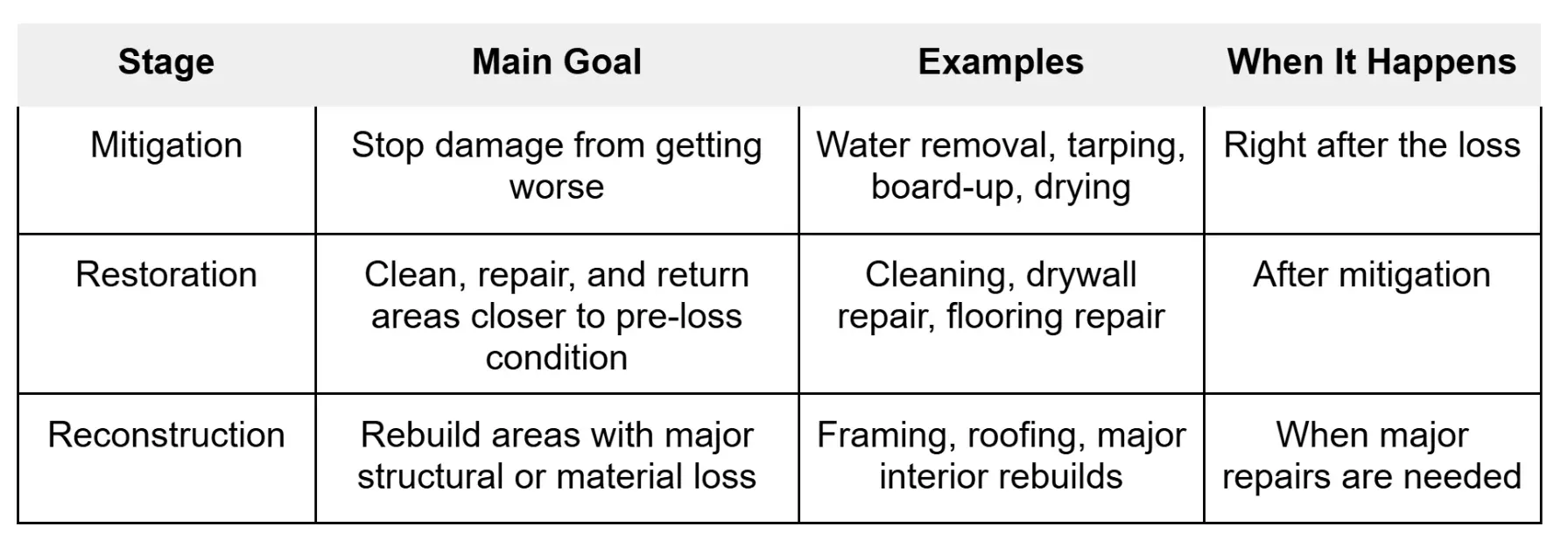
Water mitigation means taking immediate steps to reduce more damage. That may include stopping the source, extracting water, protecting belongings, removing unsafe materials, and starting drying equipment when the area is safe.
Mitigation is not the same as full restoration. It focuses on stabilization first.
Hours 1–3: Document the Damage
Get pictures of the entire room, up-close shots of wet drywall, floors, ceiling, furniture, appliances, water lines, and the source of the water. Don’t let getting more photos stand in the way of taking care of immediate safety needs.
Contacting the Insurance Company
The insurance company may request the property address, date and time of the loss, cause of the damage, areas impacted, emergency measures, pictures, video evidence, and information about the contractor. Create a claims file which should include the claim number, name of the adjuster, his phone number and e-mail.
This may depend on the type of your coverage and the reason of the loss, and you cannot presume any outcome.
Hours 2–6: Protect Safe Belongings
Remove the dry furniture from harm’s way and move objects that are sitting on the wet floor. You should ensure safety for electrical devices and relocate your clean clothes and documents to another dry location. Wet and dry items must be separated so that you can identify which need further checking.
Do not relocate any heavy, polluted, or structurally unsound materials. When the water appears to be polluted, let professionals handle it.
What Not to Throw Away Yet
Damaged items may be needed for inspection, inventory, value checks, and insurance review. Photograph and list items before disposal whenever possible.
If items are contaminated or hazardous, they may need professional removal. Do not keep unsafe items inside living areas.
Hours 3–12: Begin Structural Drying
Drying can involve water extraction, air mover, dehumidifier, moisture meters, removal of saturated materials, ventilation, and daily monitoring. Opening windows will not always be beneficial, particularly during humid days.
Hidden water is present behind walls, under floor coverings, under cabinets, within wall cavities, within the insulation, under baseboards, behind door openings, within ceiling materials, and within crawl spaces. This hidden water can result in smell and structural damage.
Flood Damage Indiana Property Owners May Face
Flood damage Indiana homes and businesses may face can come from heavy rain, river or creek flooding, flash flooding, snowmelt, stormwater backup, sump pump failure, or drainage problems. Outside floodwater may carry contaminants.
Do not touch or clean floodwater yourself if contamination is possible. Seek professional assessment and avoid direct contact.
Water Damage From Frozen Pipes
The pipes could crack or burst when they start to melt, causing water to run through the walls, ceilings, and floors.
In this case, the water should be turned off safely, contact a plumber, refrain from using any open flame, examine the electrical hazards around the leak area, and document the damage.
Water Damage Restoration Indiana Property Owners May Need
Water damage restoration Indiana work usually begins after extraction, drying, and moisture control are underway. It may include drywall replacement, insulation replacement, flooring repair, cabinet repair, painting, odor treatment, contents cleaning, and final moisture checks.
Restoration should not start before the property is properly dried. Otherwise, hidden moisture can remain trapped.
Indiana Emergency Mitigation Connection
Some of the emergency mitigation services provided by Indiana property owners include water extraction, drying, roof cover-up, board-up, contents cover-up, moisture inspection, and damage documentation.
This involves stabilizing the property to allow for further restoration work. In cases where there is extensive damage or contamination, a concerted approach may be necessary.
First 24-Hour Checklist
First 15 Minutes
- Protect people and pets.
- Avoid electrical hazards.
- Leave unsafe areas.
First Hour
- Stop the source when safe.
- Call the right professional.
- Start documentation.
First 6 Hours
- Begin extraction.
- Protect safe belongings.
- Notify the insurer.
First 12 Hours
- Start structural drying.
- Check hidden moisture.
- Save receipts and records.
By 24 Hours
- Review drying progress.
- Confirm next steps.
- Plan repairs and restoration.
Common Mistakes to Avoid
These are some of the common mistakes that a homeowner must avoid to mitigate damage done by water
- Entering standing water near electricity.
- Waiting for water to dry on its own.
- Using household vacuums.
- Ignoring wet insulation.
- Throwing away items before documentation.
- Running fans around contaminated water.
- Starting repairs before drying.
- Assuming the surface is fully dry.
- Failing to check nearby rooms.
- Losing receipts.
- Ignoring the original water source.
- Delaying professional help.
Each mistake can make recovery slower or more costly.
Contact Local Experts for More Help
When water damage or storm damage feels overwhelming, reach out to US Public Adjusters for guidance on your next steps. Our team can help you understand the damage, organize your claim, and move forward with confidence.
For fast local support, check our Google Business Profile to find recent updates, contact details, and service information. It is a simple way to connect with a trusted local expert when you need help quickly.
Do not wait for hidden damage to get worse. The sooner you ask for help, the sooner you can protect your property and reduce further loss.
Conclusion
The first 24 hours after water damage are about safety, source control, extraction, documentation, and drying. Hidden moisture is common, so the surface may look better before the property is actually dry.
If the water is contaminated, the area is unsafe, or the damage is widespread, get qualified help fast. Indiana property owners who act early can better protect the structure, belongings, and next steps.
Key Takeaways
- Safety and source control come before cleanup.
- Removing visible water does not mean the property is dry.
- Documentation and professional drying can support recovery.
Frequently Asked Questions
What should I do first after water damage?
Get people out of unsafe areas and check for electrical or structural danger. Then stop the water source if it is safe and call the right help.
How quickly should water mitigation begin?
It should begin as soon as the area is safe and the source is controlled. Faster action can help limit spread and hidden moisture.
Can I remove standing water myself?
Only if the area is small, clean, and safe, and there are no electrical or structural risks. Large amounts of water or contaminated water should be handled by professionals.
Does homeowners insurance cover water damage?
Coverage depends on the source of the water and the policy terms. Sudden plumbing damage may be treated differently from flood-related damage.
How long does water damage restoration take?
It depends on how much water entered, what materials were affected, and how much hidden moisture is present. Drying and repairs can take more than one day.
Recent Posts