
Storm Damage Insurance Claim Checklist for Indiana Homeowners
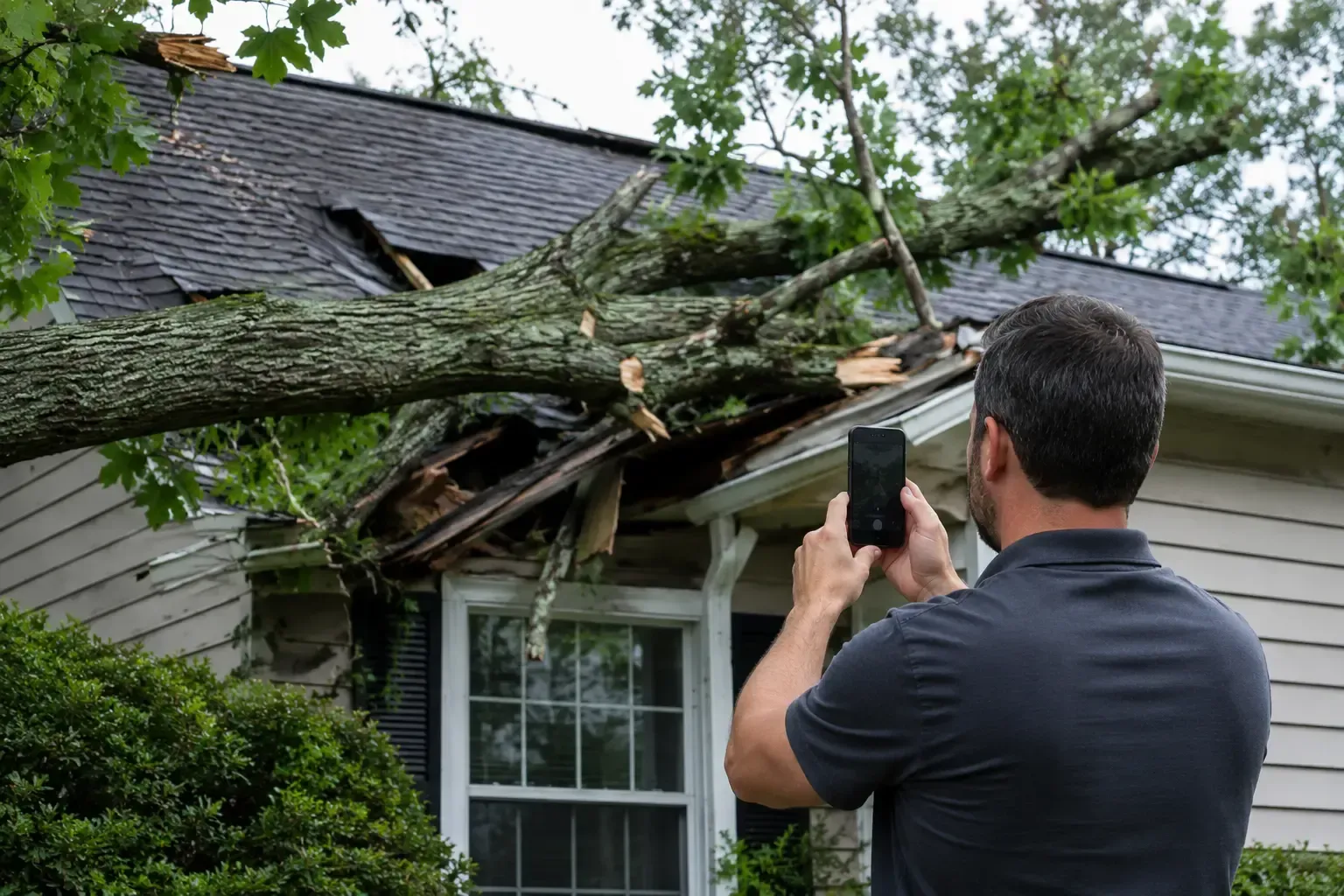
The sirens stop, you walk outside, and the roof is wearing half a tree. After an Indiana storm, the next few days decide how your insurance claim goes. Most homeowners have never filed a major claim, while the insurance company handles thousands. This checklist levels the field, from the first photo to the final settlement number.
Key Takeaways
- Document everything before you move, repair, or discard anything. Photos and video are the backbone of your claim.
- Make only temporary repairs, keep every receipt, and report the claim fast.
- You do not have to accept the first settlement offer, and Indiana law requires insurers to handle claims in good faith.
First: Safety, Then Evidence
Stay clear of downed lines, sagging ceilings, and any gas smell. Once your family is safe, the claim work starts immediately. Walk the property with your phone and capture everything in photo and video. Shoot wide shots of each elevation of the house, then close-ups of every damaged spot.
Capture the yard, fence, vehicles, outbuildings, and anything the storm touched. If hail fell, photograph hailstones next to a ruler or a coin before they melt. Storm date, time, and weather alerts support your cause of loss, so save those too.
The Complete Storm Damage Claim Checklist
Work through these in order, and do not let anyone rush you past a step.
- Secure and document the scene. Photos and video of all damage, inside and out, before anything is moved.
- Prevent further damage, temporarily. Tarp the roof, board broken windows, and shut off water to burst lines. Your policy requires reasonable steps to prevent further loss.
- Keep every receipt. Tarps, plywood, hotel nights, and emergency labor are often reimbursable.
- Make a damaged-property list. Include age, model numbers, and purchase prices where you can.
- Report the claim promptly. Per the Insurance Information Institute, notify your insurer immediately and complete claim forms quickly.
- Start a claim log. Note every call: date, name of the representative, and what was said.
- Get your own repair estimates. Independent contractor estimates give you a benchmark against the insurer's numbers.
- Do not make permanent repairs yet. The adjuster needs to see the damage as the storm left it.
The Ten Minutes Before Storm Season That Pay Off Later
The strongest claims are built before the storm ever forms. Once a year, walk your home and video every room, the roof line, and the exterior. That footage becomes your before picture when an adjuster questions whether damage is new. Store it in the cloud, not just on your phone.
While you are at it, read your declarations page. Know your wind and hail deductible, which is often separate and larger than your standard deductible. Indiana homeowners are regularly surprised by percentage-based storm deductibles at claim time. Ten minutes in May beats a bad surprise in June.
What Not to Say to Your Insurance Company
The recorded claim call matters more than most homeowners realize. Be factual and brief, and never guess. Do not speculate about the cause of the loss or accept any blame. Wording that hints at neglect or pre-existing wear gives the insurer room to recategorize the damage.
Do not downplay anything either. Saying the damage looks minor invites a settlement that only covers minor repairs. State what happened, where the damage is, and let the documentation speak.
Indiana Deadlines and Your Rights
Indiana does not give insurers a fixed number of days to settle your claim. State law instead requires them to act reasonably promptly and in good faith. Your policy sets its own clocks, though, and most require claims to be filed within one year of the loss. Read your policy's proof-of-loss requirements closely, because missing them can void an otherwise valid claim.
If a claim drags without explanation, you can file a complaint with the Indiana Department of Insurance. Slow-walking a valid claim is not something you simply have to accept.
When the Settlement Offer Comes In Low
The insurance company's adjuster works for the insurance company. That is not an accusation, just the structure of the system. Storm claims get underpaid through missed hidden damage, depreciation games, and scopes that stop at the shingle line. Wind racking, roof uplift, and water intrusion behind siding often do not show up in a twenty-minute inspection.
This is exactly where a public adjuster earns their place. We work for you, document the full scope of the loss, and negotiate the settlement on your behalf. We covered the repair side in our storm damage repair action plan, and the claim side is our core work.
Storm Damage Claim FAQs for Indiana
How do storm damage insurance claims work?
You report the loss, the insurer assigns an adjuster to inspect, and a settlement is offered from that inspection. Reporting quickly and documenting thoroughly shapes everything that follows.
How long does an insurer have to settle a claim in Indiana?
There is no fixed statutory deadline. Indiana law requires insurers to act reasonably promptly and in good faith, and your policy sets filing deadlines of its own.
What should I not say when filing my claim?
Never admit fault, guess at causes, or downplay the damage. Stick to facts and let your photos and estimates carry the claim.
Can I hire my own adjuster?
Yes. A licensed public adjuster represents you, not the insurance company, and is typically paid from the recovered settlement. It matters most on large or disputed claims.
Should I accept the first offer?
Not before comparing it against independent estimates and the full documented scope. First offers are starting points, not final words.
Before You Sign Anything, Know What Your Claim Is Worth
A storm claim settles once, and signing early locks in whatever was missed. U.S. Public Adjusters reviews the damage, the policy, and the offer so Indiana homeowners do not leave money on the table. With over 5,000 claims managed across Northwest Indiana, we know what a full settlement looks like. Talk to our team about public adjusting services for your insurance claim before you accept a number.
Recent Posts