Mold Remediation and Mitigation After Water Damage: A Guide for Indiana Property Owners
Finding mold after a leak can feel stressful, but understanding mold remediation Indiana property owners may need can make the next steps clearer. Even when the visible water is gone, moisture may remain behind drywall, under flooring, inside cabinets, or in basement corners. That hidden dampness can allow the problem to spread and make repairs more difficult.
The first step is to stop the water source, protect the affected area, and begin proper drying. Property owners should also document the damage before major cleanup starts. You will learn how mitigation, remediation, insurance records, and safe recovery work together in this guide.
Quick Answer: What Should You Do About Mold After Water Damage?
When there is water damage, the sources of water should be stopped, occupants protected, damage documented, standing water removed, and drying should commence. This may not be possible in some situations, and therefore professional assistance would be required. Drying is critical, but it is important that haste in demolishing the structure be avoided.
“Moisture Control Comes First
Wet materials should be dried as soon as practical, often within 24 to 48 hours where conditions allow. That does not guarantee mold will or will not develop, but it does matter for risk control.”
Why Mold Follows Water Damage
Water damage mold will form where the moisture is absorbed into the porous substances, and the process continues long enough for growth to occur. This can be due to water from a plumbing leak, a roof leak, an appliance leak, basement flooding, crawl space moisture, an overflow, storm damage, or firefighting water. While the water is no longer visible, the moisture still exists within the material.
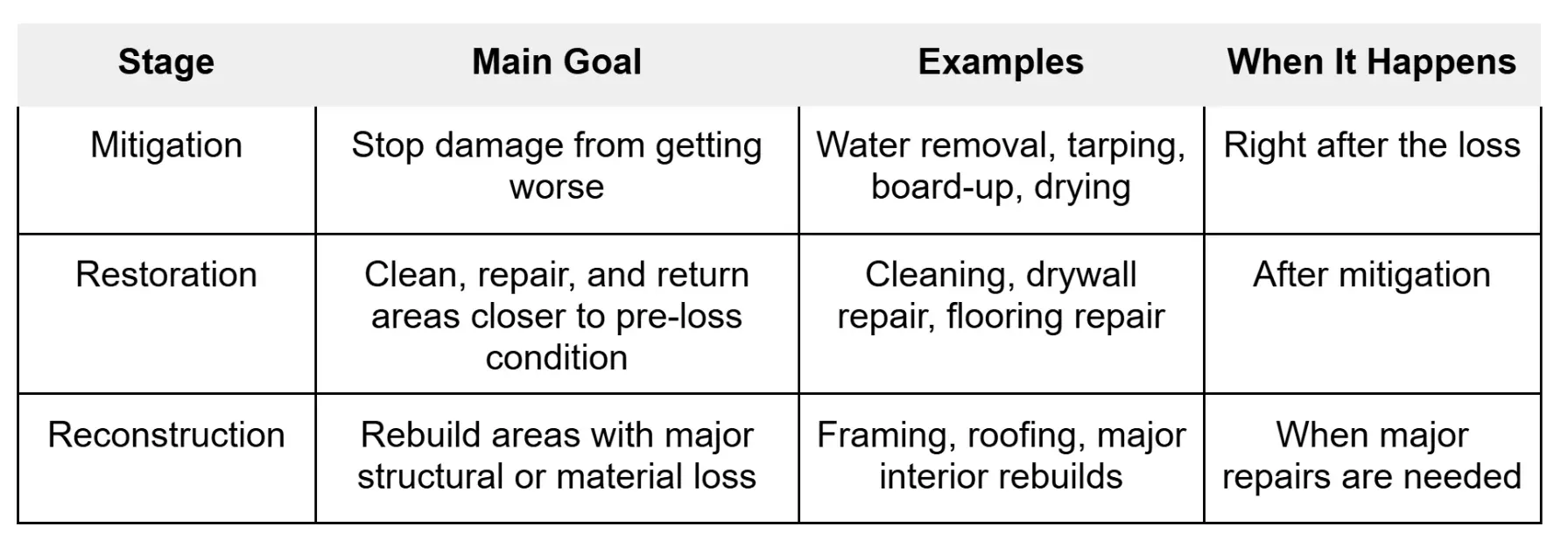
Mitigation Versus Remediation
Mitigation is the early work used to stop additional water entry, remove standing water, reduce moisture, protect unaffected areas, and stabilize property conditions.
Remediation
is the controlled process used to identify affected materials, fix the moisture source, contain contaminated areas when needed, remove materials that cannot be safely restored, clean suitable surfaces, manage dust and debris, dry the remaining structure, and verify that moisture has been addressed.
A team may extract water and begin drying after a pipe leak. If mold is later found behind drywall, remediation may include containment, controlled removal, cleaning, and more drying.
The Water-to-Mold Response Path
1. Stop the Water Source
Cleanup will not last if water keeps entering. Homeowners can shut off a safe water supply, call a plumber, or arrange roof protection. Professionals may handle roof leaks, appliance connections, or drainage issues. Do not enter standing water near electrical systems.
2. Protect Occupants and Unaffected Areas
Keep children and people with asthma and people suffering from chronic lung conditions out of the room. Also those with weak immune systems, and people who have reactions to mold should be kept out of rooms where there is mold contamination. There might be barriers, containment and controlled working areas involved by professionals.
3. Document the Damage
Record the source of water, the date it was found, visible water, staining, swollen materials, peeling paint, damaged flooring, wet drywall, wet insulation, visible mold, musty odors, personal property damage, temporary repairs, contractor visits, moisture readings, receipts, and insurance communications. Only photograph areas that are safe to access.
4. Remove Water and Dry the Structure
The standing water needs to be taken away, materials tested for wetness, and the process of drying to begin by using air movement, dehumidification, and monitoring of moisture. It is possible to have some moisture hidden under the surface even if it feels dry.
5. Remediate Established Mold Safely
With correction of the moisture source in place, remediation specialists can control the area, dispose of affected building materials, clean appropriate surfaces, and control contaminated dust. This is much more than applying a substance to visible mold. Don’t confuse surface cleaning for complete treatment if there is moisture present.
6. Verify Dryness Before Repairs Begin
Before rebuilding, the source should be corrected, damaged materials addressed, remaining materials dry, debris removed, the area cleaned, and moisture readings reviewed. Rebuild too early and the problem may return.
The First 48 Hours After Water Damage
Immediately: protect occupants, stop the water source when safe, and address electrical or structural risks.
During the first few hours: photograph the damage, report the claim, remove standing water when needed, begin moisture assessment, and protect unaffected rooms.
During the first day: evaluate wet contents, start structural drying, record moisture conditions, identify hidden wet areas, and save receipts.
By the second day: review drying progress, check for odors or visible growth, decide what can be restored, and confirm the next step.
Hidden-Mold Walkthrough
Water behind drywall could affect the insulation and studs. Water under floors could stay hidden under carpeting, pad, laminates, vinyl, and even wooden floors. Water inside cabinets could be retained at the bottom or wall joint. Poor ventilation in crawlspaces and basements could hinder drying process.
Water near HVAC components requires further investigation. Water above the ceiling could be due to leaking roofs and plumbing issues.
Signs That More Than Drying May Be Needed
Visible mold growth, a continuing musty odor, repeated staining, soft or swollen drywall, warped materials, peeling paint, damp insulation, moisture readings that stay high, mold returning after cleaning, symptoms worsening inside the property, or contamination inside wall or ceiling cavities may point to a bigger problem. One sign alone does not prove the full extent.
Indiana Mold Remediation Services May Be Needed
Professional help is more likely when the area is large, water damage is significant, sewage or floodwater is involved, hidden mold is suspected, HVAC parts are affected, structural damage is present, growth keeps returning, demolition will be extensive, asbestos or lead may be present, or occupants are vulnerable.
Mold Mitigation Services: What the Process May Include
Mold mitigation services may include water-source confirmation, moisture mapping, water extraction, structural drying, dehumidification, protection of unaffected areas, containment, air filtration, controlled removal, surface cleaning, contents evaluation, debris handling, work documentation, and a final moisture review. Not every project needs every service.
Three-Level Cleanup Decision Guide
Level 1: Small and Limited
A small, accessible area with clean water and no vulnerable occupants may sometimes be handled under EPA guidance.
Level 2: Hidden or Expanding
Professional review may fit when odors continue, moisture remains hidden, or growth returns.
Level 3: Extensive or Unsafe
Professional remediation is strongly recommended for major water damage, contaminated water, HVAC involvement, structural hazards, or widespread growth.
Do You Need Mold Testing?
Testing is not always needed when mold is visible and the cause is clear. It may be useful when the source is unclear, hidden contamination is suspected, a dispute needs documentation, or post-remediation verification is requested. One sample does not prove a whole property is safe.
Myth vs. Fact
Myth:
Mold remediation only means spraying a chemical over visible mold.
Fact:
Effective remediation focuses on correcting moisture, removing or cleaning affected materials, controlling contaminated dust, and drying the remaining structure.
Indiana Insurance Claim Guidance
For a mold damage insurance claim Indiana, property owners should keep the policy number, claim number, date of loss, cause of the water damage, photos, videos, room notes, moisture reports, contractor estimates, emergency invoices, temporary repair receipts, damaged-property inventory, insurance emails, and call notes. Coverage depends on the policy and the cause of loss.
Claim Documentation Folder
- Water-Loss Information: date, source, and emergency actions.
- Property Evidence: photos, videos, stains, odors, and visible growth.
- Professional Records: moisture maps, drying logs, scopes, and invoices.
- Damaged Property: contents lists and disposal notes.
- Insurance Communication: claim numbers, letters, and decisions.
For guidance about the immediate response to leaks, storms, fires, and other property losses, read our guide to emergency mitigation services Indiana for more details and information.
Material-Specific Guidance
- Drywall and Insulation may need controlled removal if they stay wet or contaminated.
- Carpet and Padding depend on the water source, duration, and condition.
- Wood Framing may sometimes be cleaned and dried if it is still sound.
- Hard Surfaces may be evaluated for cleaning when intact and accessible.
- Upholstery and Contents may need specialist review based on value and contamination.
Pre-Rebuilding Requirements
Before rebuilding begins, the water source should be fixed, damaged materials addressed, remaining materials dry, visible mold and debris removed, the work area cleaned, moisture readings supported, required inspections completed, and the remediation scope documented. One air sample alone does not prove a property is ready.
Professional-Process Checklist
A good process usually includes identifying the moisture source, addressing safety first, providing a written scope, documenting affected areas, protecting unaffected areas, explaining removal decisions, recording moisture readings, documenting work progress, handling debris carefully, reviewing final conditions, and giving the owner records before rebuilding.
Conclusion
Successful mold remediation starts with stopping water, protecting occupants, documenting damage, removing excess moisture, checking hidden areas, remediating established contamination, verifying dryness, and fixing the original cause. Fast action matters, but safe and documented work matters more than rushed demolition or surface-only cleaning.
Frequently Asked Questions
How quickly can mold grow after water damage?
Mold can begin developing when damp materials stay wet for too long. That is why moisture control in the first 24 to 48 hours is so important.
What is the difference between mold mitigation and remediation?
Mitigation stops more damage and reduces moisture. Remediation addresses established mold by correcting the source, containing the area when needed, and treating or removing affected materials.
Do I need mold testing before remediation begins?
Not always. If mold is visible and the cause is clear, cleanup may proceed without routine testing. Testing can help when the source is unclear or verification is needed.
Does homeowners insurance cover mold damage in Indiana?
Coverage depends on the policy, the water-loss cause, and any exclusions. It is best to review your policy and speak with your insurer promptly.
When should I hire a professional mold remediation company?
Hire one when the loss is large, hidden, unsafe, tied to sewage or flooding, or involves HVAC, structural damage, or vulnerable occupants. A professional can help manage the work more safely.
Recent Posts